

Menu
ASTM A106 Grade B pipe provides a seamless carbon steel solution for high-temperature and pressure service, particularly where piping must retain strength during operation and remain suitable for welding, bending, and other fabrication processes. Typical applications include steam lines, refinery process piping, power-generation systems, and other pressure piping exposed to elevated temperatures.
Among the Grades A, B, and C covered by ASTM A106, Grade B is commonly selected when projects require a practical balance of strength and fabrication performance. The specification covers sizes from NPS 1/8 to NPS 48 (DN 6 to DN 1200), with dimensions generally selected in accordance with ASME B36.10M.
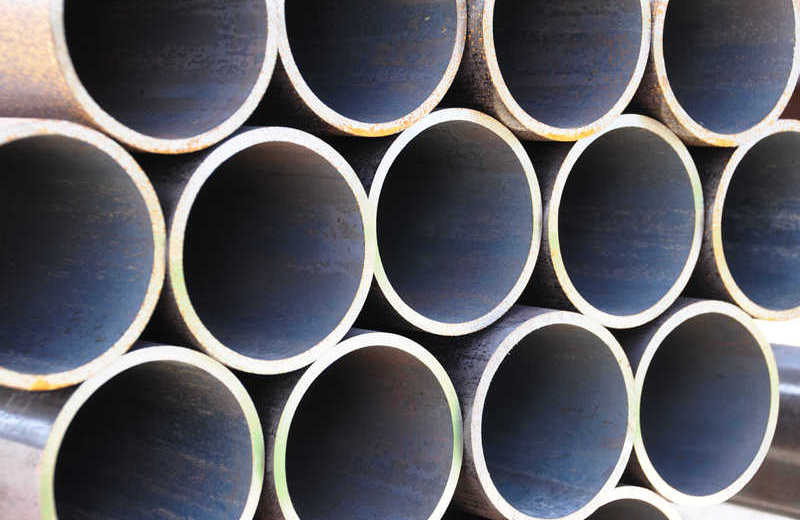
Enpro Pipe supplies ASTM A106 Grade B seamless carbon steel pipe for high-temperature and pressure piping applications, with project-specific options for size, wall thickness, length, end preparation, and surface protection. Supply can be arranged to ASTM A106/A106M or ASME SA-106 requirements, while additional coating, inspection, and sour-service requirements are confirmed against the purchase specification before production.
| Supply Item | Available Range / Options |
|---|---|
| Standard | ASTM A106/A106M; ASME SA-106 |
| Grade | Grade A, Grade B, Grade C |
| Manufacturing Type | Seamless |
| Size Range | NPS 1/2 to NPS 20; OD 21.3 mm to 508 mm |
| Wall Thickness | SCH 10, SCH 20, STD, SCH 40, SCH 80, SCH 160, XXS, subject to pipe size |
| Length | Single Random Length, Double Random Length, or fixed lengths such as 6 m and 12 m |
| End Preparation | Plain end, beveled end, threaded end where specified |
| Surface Condition | Bare/black, varnished, or project-specified protective finish |
| External Coating Options | FBE, 3PE, polyethylene-based systems, or other project-specified coatings |
| Sour Service | Material selection and qualification can be reviewed against ISO 15156 / NACE MR0175 when H₂S service is specified |
| Inspection Documents | Mill test certificate, dimensional inspection, hydrostatic/NDE records, and additional project documentation where required |
ASTM A106/A106M covers seamless carbon steel pipe for high-temperature service, with standard sizes from NPS 1/8 to NPS 48, corresponding to DN 6 to DN 1200. Nominal pipe dimensions are referenced to ASME B36.10M, while other dimensions may be supplied provided the pipe meets the remaining specification requirements. The material is intended to remain suitable for welding, bending, flanging, and similar forming operations.
| ASTM A106 Requirement | Standard Data |
|---|---|
| Product Type | Seamless carbon steel pipe |
| Service | High-temperature service |
| Grades | Grade A, Grade B, Grade C |
| Standard Size Range | NPS 1/8 to NPS 48 |
| DN Range | DN 6 to DN 1200 |
| Dimensional Reference | ASME B36.10M |
| Grade B Minimum Tensile Strength | 415 MPa (60 ksi) |
| Grade B Minimum Yield Strength | 240 MPa (35 ksi) |
| Fabrication Suitability | Welding, bending, flanging, and similar forming operations |
| Required Test Categories | Tensile, bending, flattening, hydrostatic, and nondestructive electric testing, as applicable |
| Supplementary Requirements | Additional testing may be specified in the purchase order for more demanding applications |
The 415 MPa tensile strength and 240 MPa yield strength for Grade B are minimum material-strength requirements rather than allowable design stresses; actual piping design must consider the applicable design code, operating temperature, pressure, and wall thickness. ASTM also identifies tensile, bending, flattening, hydrostatic, and nondestructive electric testing within the specification, which makes the required test scope an important item to confirm at the purchasing stage.
ASTM A106 Grade B pipe is used mainly in carbon-steel pressure piping where the line operates at elevated temperature and seamless construction is specified. ASTM A106 itself is a material specification for high-temperature service; the actual pressure rating, wall thickness, and allowable operating temperature are determined by the applicable piping design code and project line class.
For an actual line, the important check is not simply whether the service is called “steam” or “petrochemical.” The line-class design temperature and pressure determine the required schedule and allowable stress, while corrosion allowance, end preparation, NDE, and any sour-service requirements are added through the project specification.
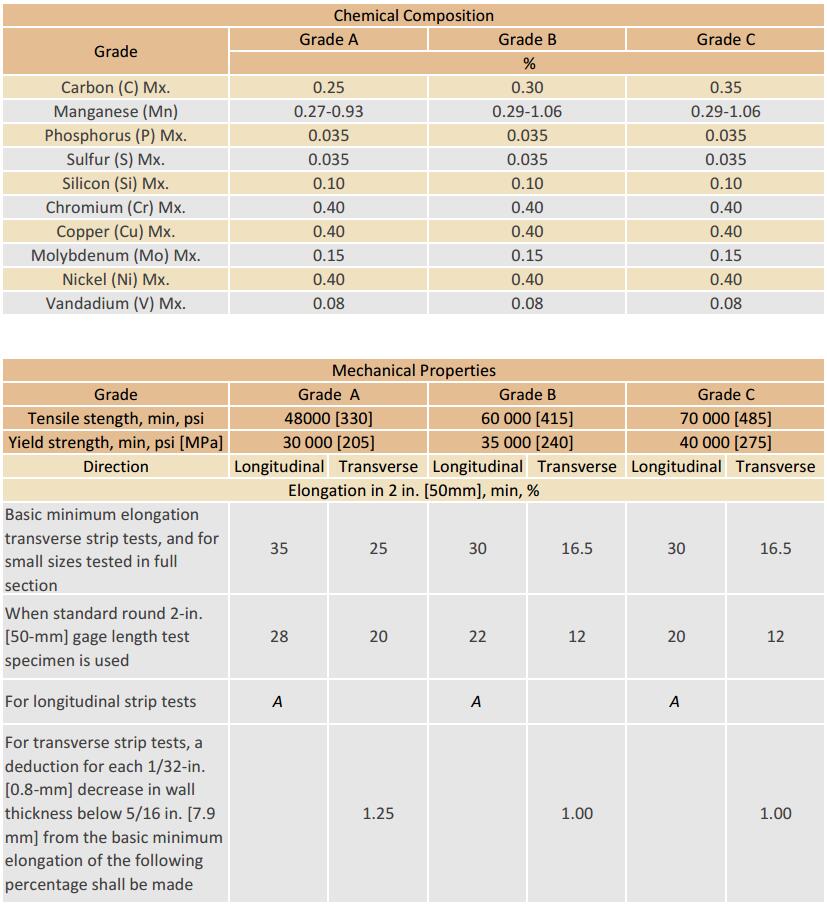
For ASTM A106 Grade B pipe, chemical composition controls the material’s strength, weldability, and response during fabrication, while mechanical properties provide the basic acceptance criteria for pressure-piping applications. Grade B limits carbon to 0.30% maximum and requires a minimum tensile strength of 415 MPa (60 ksi) and yield strength of 240 MPa (35 ksi). The tables below compare these requirements with Grades A and C for material selection and verification.


Q1: What information should be included when ordering ASTM A106 Grade B pipe?
A1: Specify the grade, NPS or OD, schedule or wall thickness, length, end preparation, quantity, coating, and required inspection documents. Any additional NDE, sour-service, or project-specific testing should also be stated in the purchase order.
Q2: How do I choose the correct schedule for ASTM A106 Grade B pipe?
A2: The schedule is selected from the required design pressure, design temperature, pipe size, corrosion allowance, and applicable piping code. ASME B36.10M provides standardized pipe dimensions, but the final wall thickness must come from the project design calculation.
Q3: What tests are required for ASTM A106 Grade B pipe?
A3: ASTM A106 includes requirements for tensile testing, bending or flattening tests as applicable, hydrostatic testing, and nondestructive electric testing. The exact inspection scope should be checked against the ordered size and project specification.
Q4: What is the difference between ASTM A106 Grade B and ASTM A53 Grade B pipe?
A4: ASTM A106 covers seamless carbon steel pipe for high-temperature service, while ASTM A53 covers seamless and welded black or hot-dip galvanized pipe for broader mechanical and pressure applications. A106 is therefore commonly specified when seamless construction and elevated-temperature service are project requirements.
Q5: Can ASTM A106 Grade B pipe be used in sour H₂S service?
A5: It can be considered only after the material and service conditions are checked against the project’s sour-service requirements. For oil and gas production environments containing H₂S, material selection and qualification are addressed by ISO 15156 / NACE MR0175; ASTM A106 compliance alone does not establish sour-service suitability.